

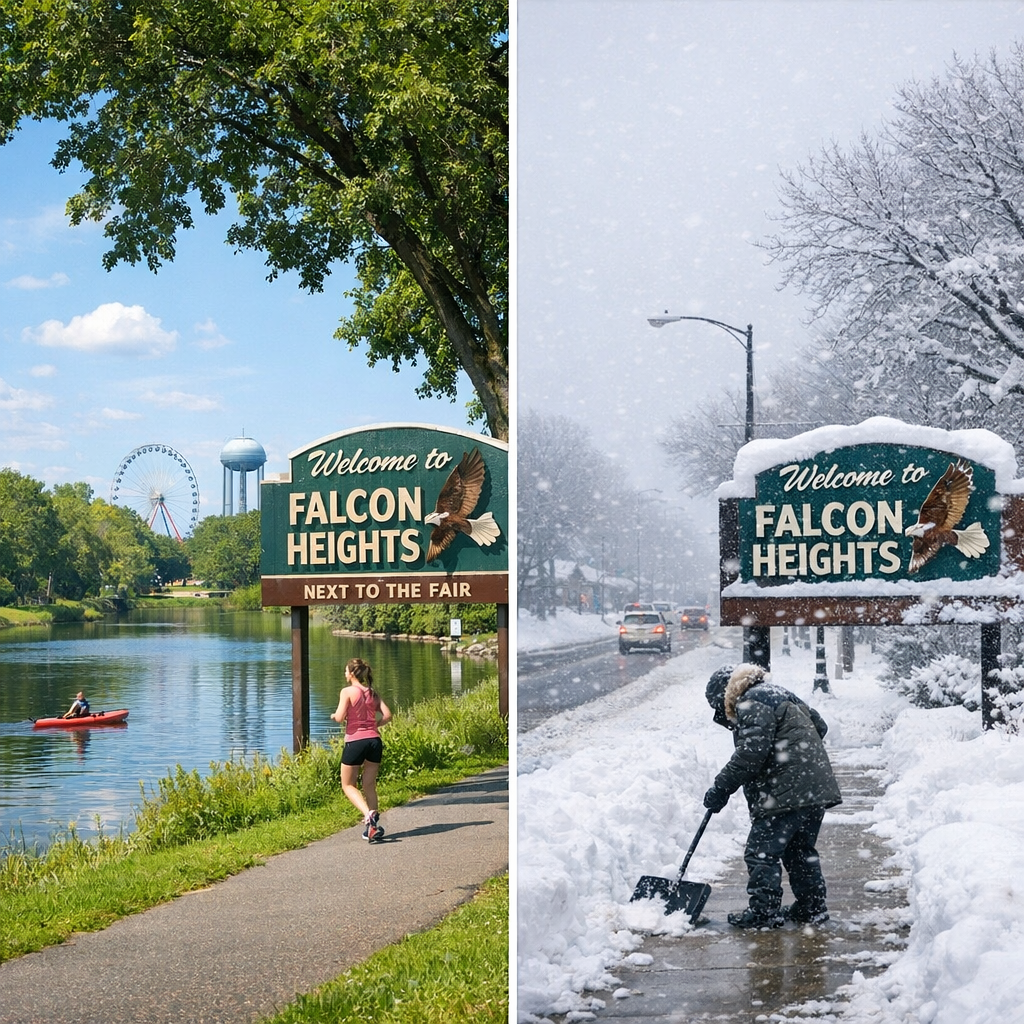
Falcon Heights, Minnesota, experiences a diverse range of weather conditions throughout the year, characterized by warm, wet summers and cold, snowy winters. Understanding these patterns can help residents and visitors prepare for the varying climate.
Temperature Variations
The warm season in Falcon Heights spans approximately 3.9 months, from late May to mid-September, with average daily high temperatures exceeding 71°F. July stands out as the hottest month, boasting an average high of 82°F and a low of 64°F. Conversely, the cold season lasts about 3.3 months, from late November to early March, with average daily highs below 35°F. January is typically the coldest month, featuring an average low of 10°F and a high of 24°F.
Precipitation and Humidity
Precipitation in Falcon Heights is distributed throughout the year, with June being the wettest month, averaging 3.82 inches of rainfall. In contrast, January is the driest month, receiving about 0.59 inches of precipitation. Humidity levels also fluctuate, with January experiencing the highest relative humidity at 90%, while April sees the lowest at 71%.
Seasonal Highlights
Summers are characterized by warm temperatures and increased humidity, making it an ideal time for outdoor activities. However, residents should be prepared for occasional thunderstorms. Winters are cold and snowy, with freezing temperatures and windy conditions, necessitating appropriate winter gear and preparedness for snow-related disruptions.
By familiarizing themselves with these seasonal patterns, residents and visitors of Falcon Heights can better plan and adapt to the city’s dynamic climate.