

By Michael Williams
In Falcon Heights, we’re living through a time of choices. Our town—home to the University of Minnesota’s Saint Paul campus and the Minnesota State Fair—is becoming a stage for bigger conversations than most notice: how we grow, what we preserve, and who we serve.
Bolstad: More than Just a Golf Course
After the University of Minnesota’s decision to sell Les Bolstad Golf Course, Rachel Development was selected to proceed. The proposed vision includes up to 1,800 housing units spanning senior housing, townhomes, duplexes, and single-family homes, alongside commercial space and open areas. These plans promise to bring opportunity—but also tension—to our neighborhood. Do we build with sustainability and affordability in mind, or let market pressures shape a space that only some can afford? These are not hypothetical choices; they’re coming to us now.
Affordable Housing: A Key for Our Community’s Character
At 1644 Larpenteur Avenue West, the Fairway Commons project is expected to be a 110-unit affordable housing apartment building for adults 55 and older. Modeled with studios to two-bedroom apartments, with underground parking, it shows what the city can do when we commit to housing options beyond the luxury bracket—especially for those on fixed incomes.
Policing and Trust: Why They Matter Here
After the killing of Philando Castile in 2016, Falcon Heights shifted away from its police contract with St. Anthony Village and depends now on the Ramsey County Sheriff’s Office. But conversations continue about what our community safety model should look like—in fairness, responsiveness, and transparency. It’s about more than who answers the calls. It’s about how we relate to each other.
Public Voice and Where We Go From Here
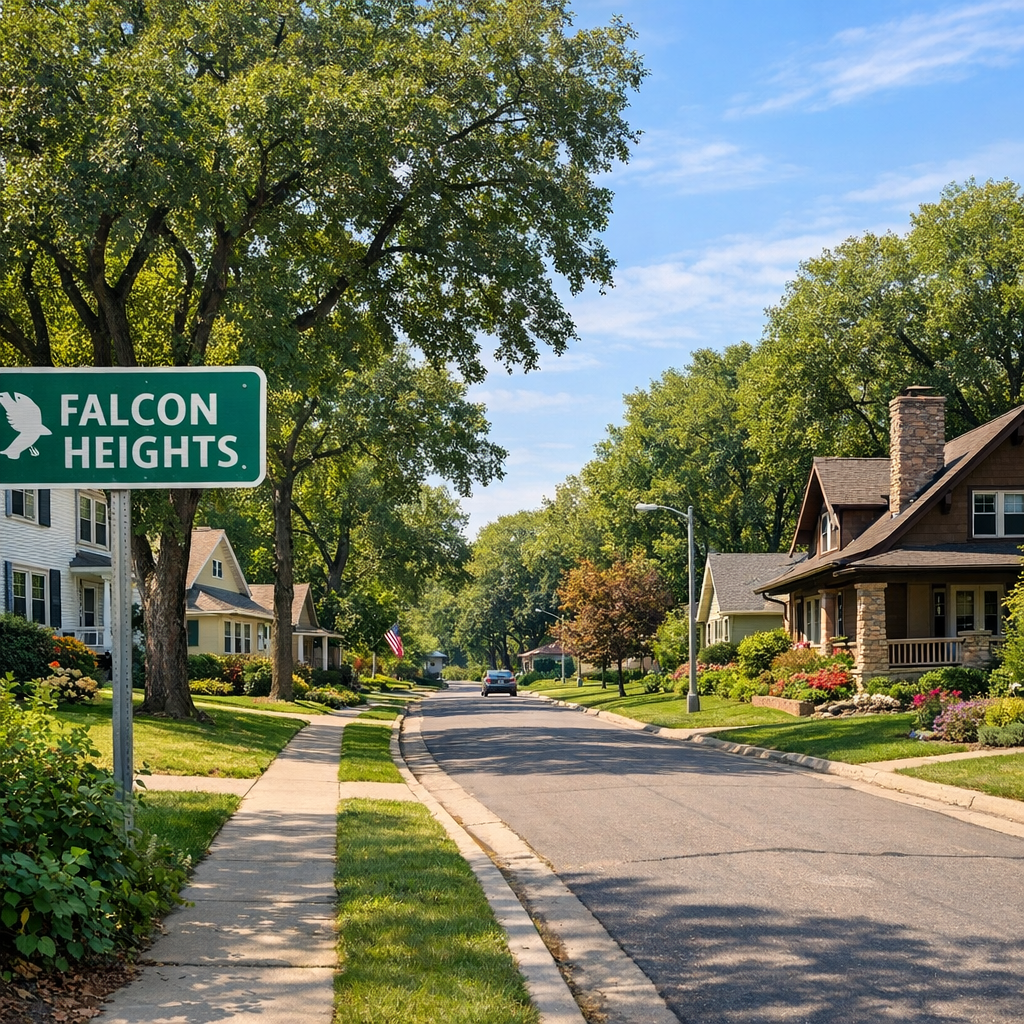
We’ve seen through recent public forums, online feedback, and city planning meetings that many of us are worried about maintaining the feel of Falcon Heights—our parks, tree-lined streets, open spaces. We’re also aware of the flip side: aging infrastructure, rising living costs, and a need for diversity in housing types. And among us is a strong desire for civic participation: not just being heard, but being part of the decisions that shape our common space.
What We Should Keep in Mind
- Balance density with character. Thoughtful zoning and design can allow more homes without giving up the open, welcoming feel we love.
- Ensure affordability is baked in. Targeting housing just for the wealthy shifts the city’s heart. We need homes for all income levels, especially seniors and working families.
- Engage early and often. Public input shouldn’t be an afterthought. It should inform zoning decisions, development priorities, parking policies.
- Build models of policing that heal. Trust can’t be assumed. It’s forged through policies that support accountability, fairness, and community oversight.
Falcon Heights is small in size—just over two square miles, with under 6,000 residents—but that doesn’t lessen what we face. The strength of our community comes from how we show up: neighbors talking, plans being debated, futures shaped.
What kind of city do we want? One that responds to change, yes—but that keeps its soul.